Black-figure and red-figure pottery are two of the most recognisable artistic styles associated with Ancient Greek ceramics.
At first glance, the difference appears simple: in black-figure pottery, the figures are dark against a reddish background, while in red-figure pottery the relationship is reversed.
But the distinction goes much deeper.
The two techniques developed at different stages of Greek ceramic art and gave painters very different possibilities for representing people, clothing, movement, mythology and everyday life.
Understanding the difference between black-figure and red-figure pottery makes it easier to appreciate how sophisticated Ancient Greek ceramic craftsmanship became.
What Is Black-Figure Pottery?
Black-figure pottery is a technique in which figures and decorative elements appear dark or black against the natural reddish colour of the clay.
The technique became particularly important in Greek pottery during the Archaic period.
Artists applied a refined clay slip to the areas intended to become dark during firing.
Fine details were then often created by incising lines into the dark surface.
This allowed painters to represent features such as:
- Facial details
- Hair
- Clothing
- Armour
- Musculature
- Decorative patterns
The strong contrast between the black figures and reddish clay gave this pottery its distinctive appearance.
How Was Black-Figure Pottery Decorated?
The black-figure technique required careful planning.
Once the dark silhouette had been painted onto the vessel, details could be scratched through the surface using a sharp tool.
This meant that many internal details appeared as fine reddish lines cutting through the black figure.
Additional colours could sometimes be applied for specific details.
The result was highly graphic and decorative, with strong silhouettes and clearly defined shapes.
Common Subjects in Black-Figure Pottery
Black-figure vessels frequently depicted mythology and heroic stories.
Popular subjects included:
- Heracles and his labours
- Achilles and other warriors
- Athena
- Dionysus
- Battle scenes
- Athletic competitions
- Chariots
- Banquets and celebrations
These scenes transformed pottery into a medium for storytelling.
For modern viewers, they also provide valuable information about the beliefs, clothing, weapons and customs of Ancient Greek society.
What Is Red-Figure Pottery?
Red-figure pottery developed later and essentially reversed the visual system used in black-figure decoration.
Instead of painting the figures dark, artists left the figures in the natural reddish colour of the clay.
The surrounding background was covered with the dark slip.
This apparently simple change had a major artistic advantage.
Details inside the figures could now be drawn with a brush rather than being incised.
This allowed artists to create finer lines and more natural representations of the human body.
Why Was Red-Figure Pottery Important?
Red-figure painting gave artists considerably more freedom.
Using painted lines rather than incised ones made it easier to represent:
- Muscles
- Facial expressions
- Flowing clothing
- Complex poses
- Movement
- Perspective
Human figures became more natural and dynamic.
This made the technique particularly effective for complex mythological scenes and detailed representations of everyday activities.
Black-Figure vs Red-Figure Pottery
The easiest way to distinguish the two styles is by looking at the colour of the figures.
In black-figure pottery, the figures are dark and the background remains reddish.
In red-figure pottery, the figures remain reddish while the surrounding background becomes dark.
The method used to create details is also different.
Black-figure artists often incised details into the painted surface.
Red-figure painters could draw internal details directly using fine brushwork.
This gave red-figure artists greater flexibility when depicting anatomy and movement.
Were Both Techniques Used at the Same Time?
There was a transitional period when both techniques existed simultaneously.
Some remarkable vessels were even decorated using both methods.
These are commonly described as bilingual vessels because one side could use black-figure decoration while another used red-figure.
Such objects demonstrate how Greek craftsmen experimented with new artistic approaches while older traditions were still in use.
Mythology in Greek Pottery
Both black-figure and red-figure pottery frequently featured stories from Greek mythology.
Vessels could depict gods such as Zeus, Athena, Apollo and Dionysus, as well as heroes including Heracles and Achilles.
These scenes helped transform ordinary ceramic objects into visual narratives.
You can read more about this tradition in our guide to Ancient Greek pottery symbols and motifs.
Which Vessels Used These Techniques?
Black-figure and red-figure decoration appeared on many different types of pottery.
These included:
- Αμφορείς
- Κρατήρες
- Οινοχόες
- Kylikes
- Hydriai
- Lekythoi
The shape of the vessel often influenced how the scene was arranged.
A large krater provided space for elaborate compositions involving many figures, while the broad surface of an amphora offered a strong central area for mythological scenes.
Learn more about the different forms in our guide to Ancient Greek pottery types.
Black-Figure Amphorae
Amphorae are among the most recognisable vessels decorated using the black-figure technique.
Their broad bodies created ideal surfaces for large scenes involving gods, warriors and mythology.
The combination of the amphora’s balanced silhouette and strongly contrasted decoration became one of the defining images of Ancient Greek ceramic art.
Explore our collection of Greek Amphorae inspired by classical Greek forms.
Red-Figure Kraters
Kraters were particularly well suited to red-figure painting because of their large decorative surfaces.
Painters could create complex compositions featuring numerous figures and detailed movement.
Because kraters were closely associated with the symposium and the culture of wine, their decoration often included mythological and social themes related to drinking and celebration.
Explore our Greek Kraters inspired by these ancient forms.
Why Does Ancient Greek Pottery Look Red and Black?
The characteristic colours were created through a sophisticated firing process rather than simply through the use of black and red paint.
Greek potters carefully controlled the conditions inside the kiln during different stages of firing.
The iron-rich clay naturally developed its reddish appearance, while areas treated with the special clay slip became dark.
This process required considerable skill and experience.
The dramatic contrast that resulted became one of the defining visual features of Ancient Greek pottery.
The Influence of Ancient Greek Pottery Today
Black-figure and red-figure pottery continue to influence contemporary art and ceramic design.
The combination of classical vessel shapes, mythological scenes and strong decorative contrasts remains immediately associated with Ancient Greece.
Modern ceramic craftsmen may reinterpret these traditions through different colours, relief decoration, surface textures and finishes while preserving the visual connection to Greek heritage.
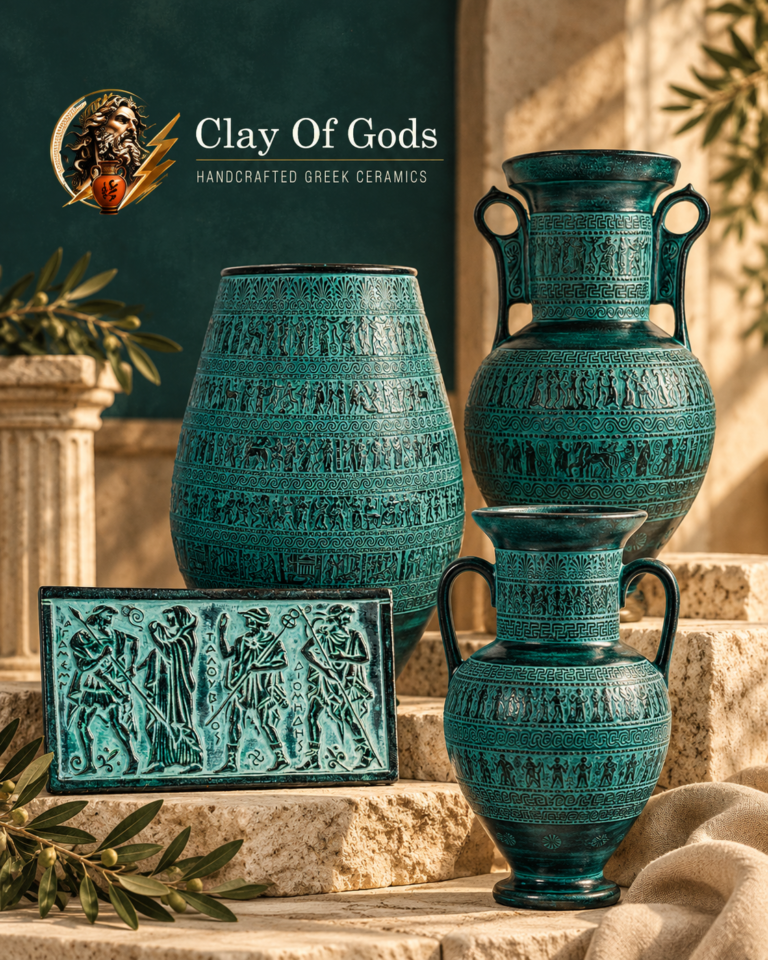
At Clay Of Gods, our handmade ceramics are inspired by the forms, mythology and decorative traditions of Ancient Greece.
Continuing a Greek Ceramic Tradition
Clay Of Gods continues a family ceramic tradition that began in 1950.
Our work draws inspiration from the extraordinary ceramic heritage of Greece, from classical vessel shapes to mythological imagery and decorative motifs.
Each piece is individually handcrafted, creating natural variations in texture and finish while maintaining a connection with the traditions that inspire it.
Explore our complete collection of handmade Greek ceramics inspired by Ancient Greek art, mythology and ceramic craftsmanship.